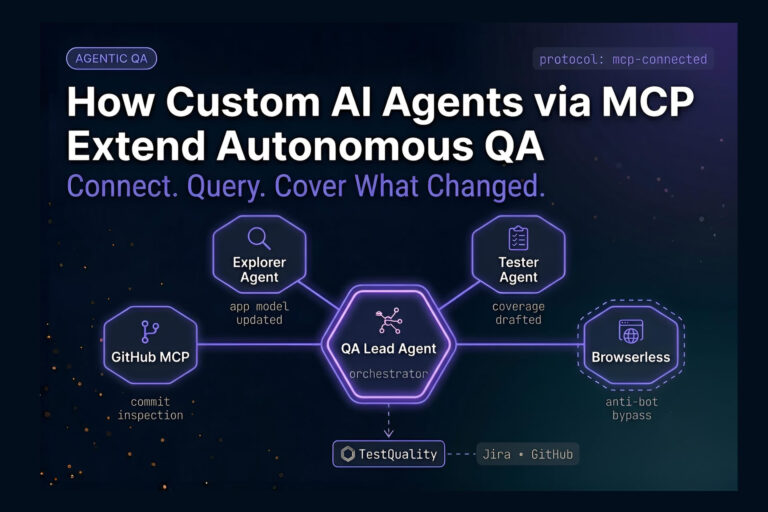
Custom AI agents via MCP (Model Context Protocol) let an autonomous QA system reach beyond its built-in skills by connecting to external tools such as GitHub and browser automation services. In practice, that means a QA agent can inspect source code changes, identify new features, compare them against existing test coverage, and create missing test… Continue reading How custom AI agents via MCP extend autonomous QA
Category: Automation Testing
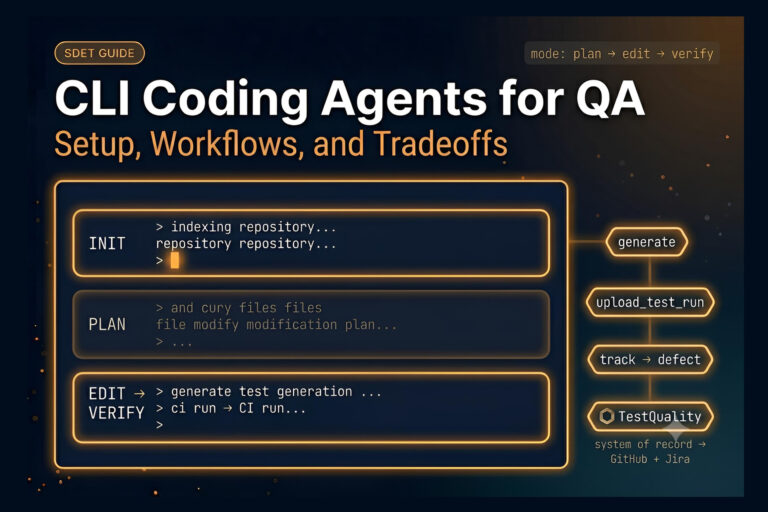
CLI Coding Agents for QA Engineers: Setup, Workflows, and Tradeoffs
At a Glance CLI Coding Agents for QA: What You Actually Get Terminal-resident, repo-aware, and capable of running your entire test loop autonomously. Scope advantage: CLI agents operate across your entire repository — not just open files — letting you assign multi-file refactors, coverage gap analysis, and bulk selector updates without leaving the terminal. Verification… Continue reading CLI Coding Agents for QA Engineers: Setup, Workflows, and Tradeoffs
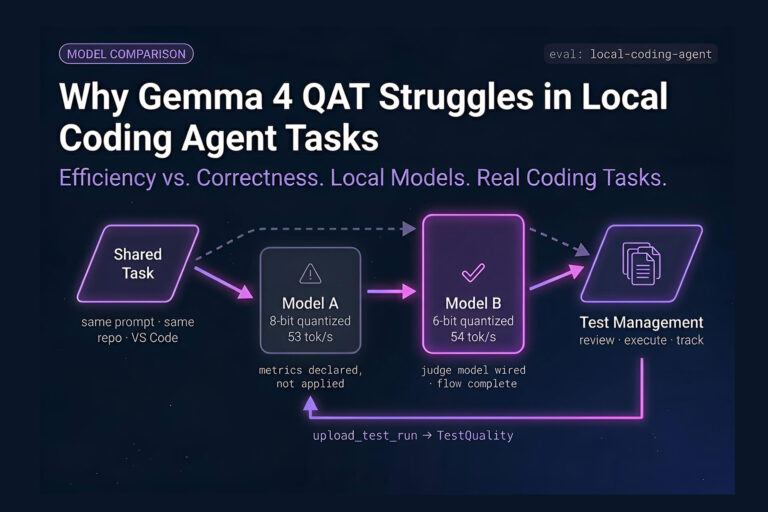
Why Gemma 4 QAT Struggles in Local Coding Agent Tasks
Gemma 4 QAT refers to Google’s quantization-aware versions of Gemma 4, designed to reduce memory use and improve local inference speed on developer machines. In a direct head-to-head coding-agent task using VS Code and DeepEval, Gemma 4 QAT produced structurally incomplete test code — initializing evaluation metrics without applying them correctly and omitting the required… Continue reading Why Gemma 4 QAT Struggles in Local Coding Agent Tasks
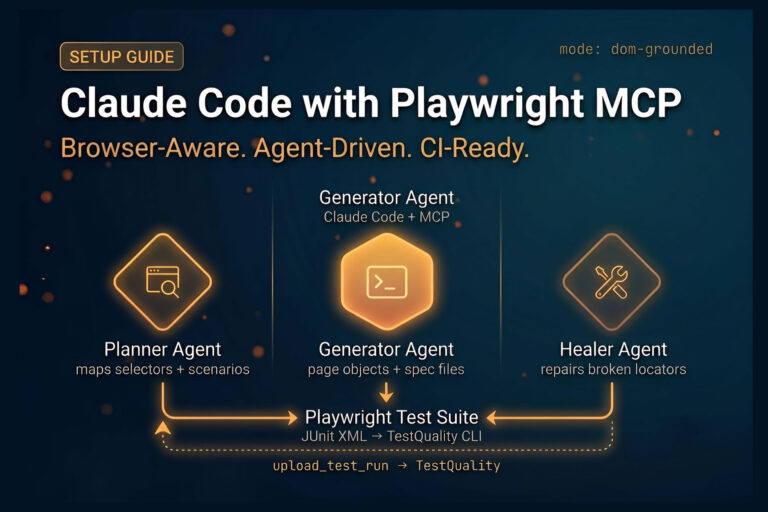
Claude Code with Playwright MCP: Agentic AI Test Automation Setup Guide
Claude Code with Playwright MCP is an agentic QA workflow where Claude Code uses the Playwright Model Context Protocol server to connect a coding agent to a live browser. The agent navigates the application, reads the actual DOM, captures real selectors, and generates executable Playwright tests from what it observes — instead of guessing page… Continue reading Claude Code with Playwright MCP: Agentic AI Test Automation Setup Guide
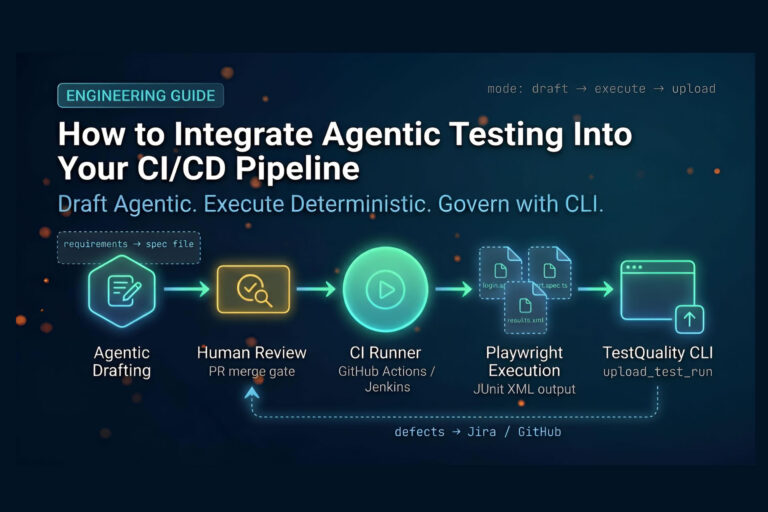
How To Integrate Agentic Testing Into Your CI/CD Pipeline
At a Glance Agentic Testing in CI/CD: Where the Boundary Is and How to Cross It Cleanly AI drafts the tests. Playwright runs them. The CLI governs both. The boundary is strict: Agentic tools belong in the drafting layer — analysis, coverage planning, and script generation. Deterministic frameworks like Playwright or Selenium own execution. Mixing… Continue reading How To Integrate Agentic Testing Into Your CI/CD Pipeline
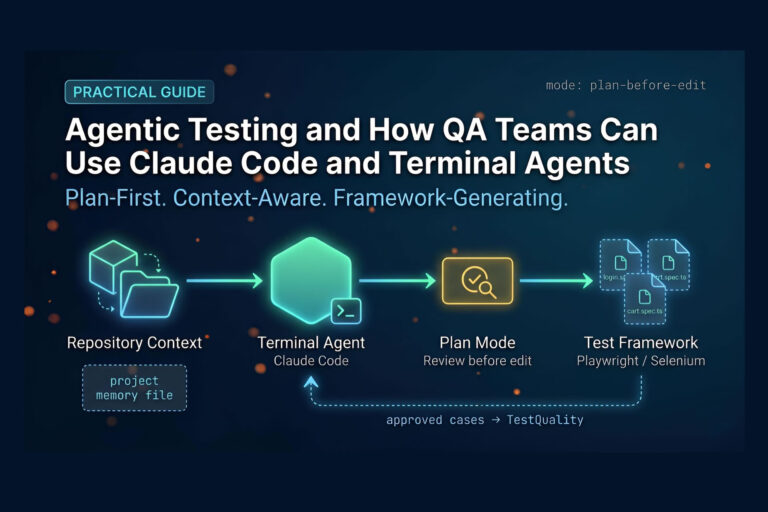
Agentic Testing and How QA Teams Can Use Claude Code and Terminal Agents
Agentic Testing and QA is a practice in which AI agents operate directly on a project — reading files, planning tasks, generating framework code, and interacting with a browser — rather than simply answering prompts inside a chat window. Tools like Claude Code bring this capability to the terminal, giving QA teams a command-line assistant… Continue reading Agentic Testing and How QA Teams Can Use Claude Code and Terminal Agents
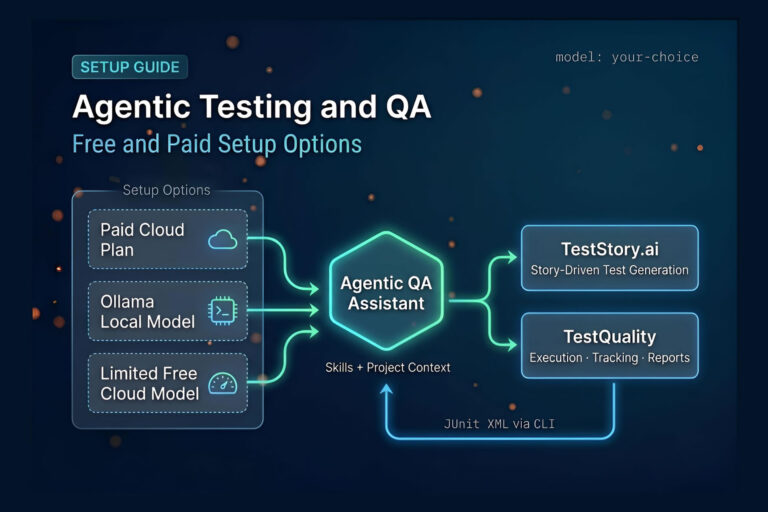
Free and Paid Ways to Run Cloud Code for Agentic Testing and QA
Agentic Testing and QA describes a testing workflow where an AI coding assistant does more than answer one-off prompts. It can inspect a project directory, reason over multiple files, propose test scaffolding, and work in a continuous loop with the engineer — rather than waiting to be prompted at each step. The practical bottleneck for… Continue reading Free and Paid Ways to Run Cloud Code for Agentic Testing and QA
How to Choose the Right Test Automation Framework in 2026
Key Takeaways Picking the wrong test automation framework is a decision that compounds over time. Choose based on your team’s stack, not industry hype. Before committing to any framework, run a proof of concept against your actual CI/CD pipeline, not a demo environment. Choosing a test automation framework used to feel like picking a car:… Continue reading How to Choose the Right Test Automation Framework in 2026
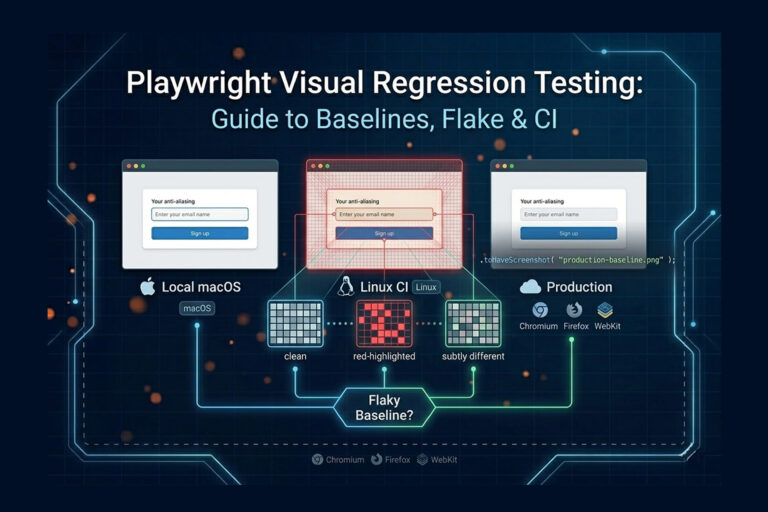
Playwright Visual Regression Testing: A Production Guide to Baselines, Flake, and CI
At a Glance Native Playwright visual regression is free to start and expensive to scale. The cost shows up in CI, not on day one. Cross-OS rendering breaks pixel diffs: Windows, macOS, and Linux render fonts and spacing differently, so the same code produces different baselines on different machines. Component snapshots beat full-page captures: smaller… Continue reading Playwright Visual Regression Testing: A Production Guide to Baselines, Flake, and CI
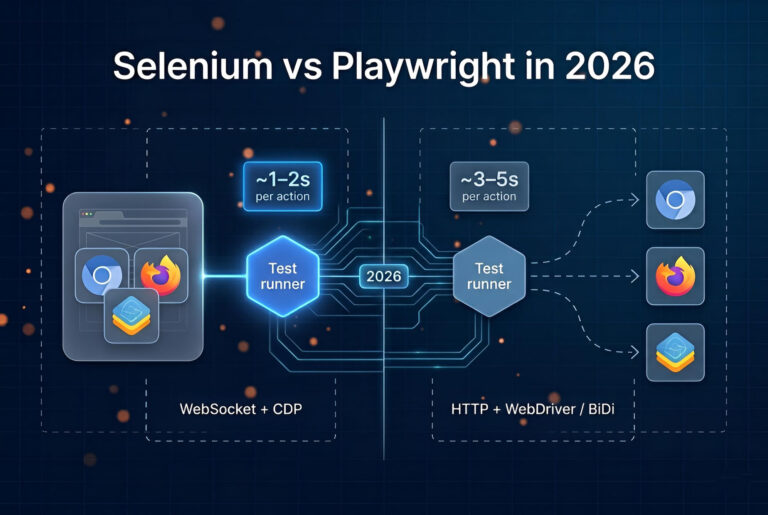
Selenium vs Playwright in 2026: A Methodology-Driven Comparison
At a Glance Selenium vs Playwright in 2026, decided by architecture, not hype A methodology-driven comparison — benchmarks, BiDi, MCP, and migration math. Speed gap is real: Playwright executes actions in 1–2 seconds via WebSocket/CDP versus Selenium’s 3–5 seconds via HTTP/WebDriver, with parallel suite runs roughly 3x faster in published benchmarks. Adoption has flipped in… Continue reading Selenium vs Playwright in 2026: A Methodology-Driven Comparison