At a Glance
9 tools, 5 criteria, 1 buying decision
Independent comparison for QA leads evaluating test management software in 2026.
Pricing transparency is now a differentiator: only 7 of 9 leading tools disclose pricing publicly — Tricentis qTest and Jira Rovo gate costs behind sales conversations.
Jira integration falls into 3 patterns: native marketplace apps, API-level bilateral sync, or hybrid. TestQuality is the only tool offering both native + API in this comparison.
AI test case generators are standard, not experimental: all 9 tools ship AI generation in 2026. Input range and integration depth now separate them, not whether AI exists.
The right test management tool in 2026 is the one that bridges your experimentation-to-scaling gap — governing autonomous execution while keeping humans firmly in the validation loop.
The best test management tools in 2026 are TestRail, Xray, Zephyr, Qase, PractiTest, Tricentis qTest, QMetry, Jira native AI (Rovo), and TestQuality. QA teams evaluate these platforms using five core criteria: seamless Jira integration, useful AI capabilities, scalability and performance, automation support, and end-to-end test orchestration. As organizations transition from manual repositories to AI-assisted execution, selecting the right test management software requires balancing workflow needs with pricing transparency. TestQuality distinguishes itself by offering the lowest published entry price, 500 included AI generation credits via TestStory.ai, and a hybrid integration model combining a native Jira application with bilateral API synchronization for maximum flexibility.
What is a test management tool in 2026?
A test management tool in 2026 is a centralized orchestration platform that handles both deterministic testing and the probabilistic behavior of machine learning systems. These platforms have evolved beyond manual documentation hubs into hybrid systems blending human expertise with AI-driven test execution and data validation.
Per the ISTQB Certified Tester AI Testing (CT-AI) Version 2.0, modern products must support traditional testing levels alongside model testing and synthetic data validation. The State of Software Quality Report 2025 notes that this software category evolved to support the "hybrid tester." This shift transitions teams from static spreadsheet repositories to dynamic platforms capable of orchestrating continuous quality.
An AI-native test case management tool uses autonomous agents to execute tests and manage coverage, whereas legacy tools rely on isolated generative features appended to manual frameworks. Humans remain the orchestrators, validating business intent and compliance, while the test management software accelerates administrative test drafting and execution tracking. This is the discipline that makes agentic QA architecture operational at scale.
Why does AI matter in modern test management software?
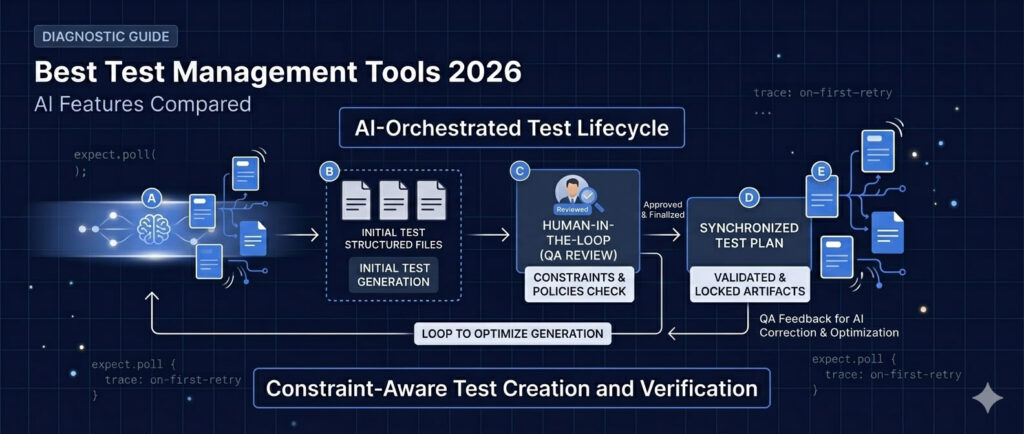
AI matters in modern test management software because it resolves severe scaling bottlenecks in test creation and data generation. AI testing tools accelerate test drafting, allowing QA teams to increase test breadth and frequency without linearly scaling manual headcount or infrastructure costs.
The integration of an ai test case generator into quality workflows is no longer experimental; it is an industry standard. The Stack Overflow Developer Survey 2025 reports that 84% of respondents are using or planning to use AI in their development process. Independently, Capgemini's World Quality Report 2025-26 found that while 43% of organizations experiment with Gen AI in QA, only 15% have successfully scaled it enterprise-wide.
This experimentation-to-scaling gap is primarily an infrastructure problem. The same Capgemini report notes that 60% of organizations struggle with secure, scalable test data, which ultimately slows test automation. Selecting the right test management tool bridges this gap. By governing autonomous execution and resolving data complexity, modern platforms move teams from isolated AI experiments into unified, scalable quality orchestration where humans validate outcomes rather than writing boilerplate steps.
Which are the best test management tools 2026 has to offer?
The top test management tools for 2026 are TestRail, Xray, Zephyr, Qase, PractiTest, Tricentis qTest, QMetry, Jira native AI (Rovo), and TestQuality. These platforms range from standalone enterprise suites to native Atlassian applications, each offering distinct approaches to AI test generation and issue synchronization
| Tool | AI generation | What it generates | Input formats | Jira integration | Public pricing | Best-fit user |
|---|---|---|---|---|---|---|
| TestRail | Yes | Titles, descriptions, steps, expected results, BDD scenarios, automation scripts | Product requirements, code files, config files | Native marketplace app | $38/seat/mo Professional, $76/seat/mo Enterprise | Large enterprises requiring compliance reporting and audit trails |
| Xray | Yes | Manual and Cucumber test cases | Requirements | Native Jira app | $100/yr for 10 users | Jira users wanting test management woven into development |
| Zephyr | Yes | Structured test cases, test step suggestions, no-code automation | Jira work items or prompts | Native Jira app | Flat $10 up to 10 users; then $0.37–$6.49/user/month | Atlassian-focused teams prioritizing native Jira execution |
| Qase | Yes | Test cases, automated testing scripts | Requirements | API-level bilateral sync | Free $0, Startup $24/user, Business $30/user | Growing teams needing unified manual + automated testing |
| PractiTest | Yes | Tests | Jira or Azure DevOps imports | API-level 2-way sync | Team $49/user/month | Complex QA orgs needing customization and end-to-end workflow |
| Tricentis qTest | Yes | Test cases, test steps, automation scripts | Requirements, images, natural language | Native app and API event-driven sync | Not documented in vendor sources | Enterprise QA teams managing diverse DevOps toolsets |
| QMetry | Yes | Test cases, predictive coverage suggestions | User stories, requirements, acceptance criteria | Native Jira app | Free up to 10 users; then $0.50–$3.80/user/month | Enterprise teams scaling agile test management |
| Jira native AI (Rovo) | Yes | Pull requests, release notes, UI code, data queries, subtasks | Loom videos, device/network logs, Slack messages, Figma designs | Built-in native | Not documented in vendor sources | Atlassian stack teams wanting autonomous agents in workflows |
| TestQuality / TestStory.ai | Yes | Comprehensive manual test cases | User stories, epics, issues, free-form text, process diagrams, source code | Native app AND API sync | Free $0/mo, Team $9/user/mo, Business $12/user/mo, Enterprise $17/user/mo | Integration-focused teams blending GitHub and Jira workflows |
TestRail provides comprehensive compliance reporting and detailed audit trails for large enterprises, accepting product requirements and code files to generate BDD scenarios and automation scripts. Xray delivers a strictly Jira-native experience where requirements link directly to manual and Cucumber test cases inside the Atlassian interface. Zephyr focuses on scalable test executions and no-code automation, operating as a native Jira application without slowing platform performance.
Qase targets growing teams needing a unified platform for manual and automated testing, featuring an API-level bilateral Jira sync. PractiTest serves complex QA organizations requiring extensive customization, utilizing a real-time, two-way API sync for requirements and issues. Tricentis qTest acts as an enterprise platform managing diverse DevOps toolsets, syncing Cucumber files in real time via native app and event-driven API integration.
QMetry scales agile test management inside or outside Jira, featuring built-in JQL functions to query stories and bugs alongside predictive test coverage suggestions. Jira native AI (Rovo) provides built-in autonomous agents directly in Atlassian workflows, generating pull requests, UI code, and subtasks from device logs and Slack messages. TestQuality (featuring TestStory.ai) positions itself as an integration-first tool blending with GitHub and Jira workflows, offering both a native Jira app and API sync alongside a flexible AI test case generator.
Try It Now
See what an AI test case generator actually produces — before you commit to any tool.
Paste any user story into TestStory.ai and watch the orchestration layer generate structured, Gherkin-formatted test cases instantly — covering happy paths, edge cases, and the failure scenarios your team would typically miss. No account required.
No credit card required.
How do leading test management tools handle Jira integration?
Leading test management tools handle Jira integration through either native marketplace applications or bilateral API synchronization. Native apps embed testing directly into Jira issues, while API integrations map external test artifacts to Jira epics and defects in real time for standalone platforms.
- TestRail: Native Jira app linking requirements and pushing defects directly to Jira.
- Xray: Operates entirely as a native Jira app, delivering an experience where requirements link to test cases as Jira issue types.
- Zephyr: Native Jira app designed to track test execution inside Jira without slowing Atlassian performance.
- Qase: Bilateral API integration syncing test cases, runs, defects, and requirement statuses in real time. Restricting access to specific Jira projects requires Business or Enterprise plans.
- PractiTest: Real-time, two-way API sync specifically for requirements and issues.
- Tricentis qTest: Combination native Jira app and API event-driven integration syncing Cucumber files in real time.
- QMetry: Native Jira app featuring built-in JQL functions to query stories and bugs.
- Jira native AI (Rovo): Built natively into the platform to update statuses directly, though it requires Jira Cloud Standard, Premium, or Enterprise plans.
- TestQuality: Uniquely offers both API sync and a native application. Provides real-time, two-way defect and requirement synchronization, requiring admin rights in both platforms to configure.
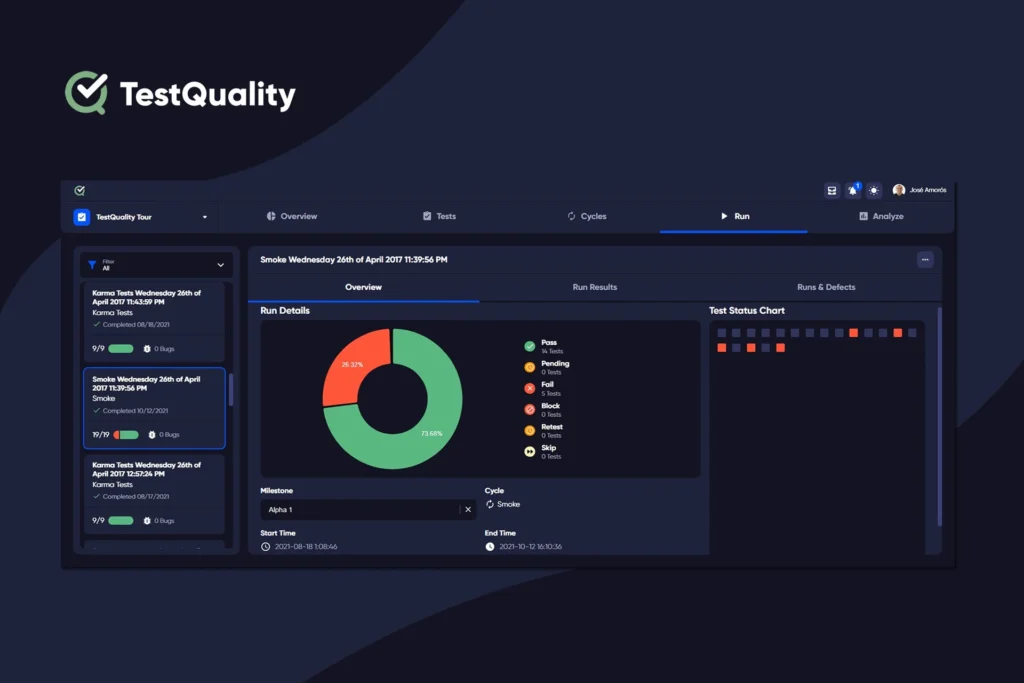
TestQuality's hybrid approach is a distinct differentiator in jira test management. By offering both a native Jira application and API-level synchronization, it allows teams to maintain a standalone, high-performance testing repository while keeping Jira issues perfectly mirrored. When a tester identifies a failure from an automated runner, they manually log the defect as a deliberate human-in-the-loop quality control step. Once that defect exists in TestQuality, the GitHub and Jira sync is fully automatic. For teams comparing Jira-only AI options, our deep dive on Jira AI test case generators covers free vs enterprise tradeoffs in detail.https://testquality.com/
What does AI test case generation actually produce in each tool?
AI test case generation produces structured test scenarios, preconditions, execution steps, and expected results. Advanced tools also generate BDD scenarios, automated testing scripts, and predictive coverage suggestions by ingesting diverse inputs like user stories, product requirements, and system process diagrams.
- TestRail: Generates titles, descriptions, steps, expected results, BDD scenarios, and automation scripts from product requirements, code files, and config files.
- Xray: Generates manual and Cucumber test cases directly from requirements.
- Zephyr: Produces structured test cases, test step suggestions, and no-code automation from Jira work items or freeform prompts.
- Qase: Creates test cases and automated testing scripts based on requirements.
- PractiTest: Outputs tests based on Jira or Azure DevOps imports.
- Tricentis qTest: Generates test cases, test steps, and automation scripts from requirements, images, and natural language.
- QMetry: Produces test cases and predictive coverage suggestions from user stories, requirements, and acceptance criteria.
- Jira native AI (Rovo): Outputs pull requests, release notes, UI code, data queries, and subtasks from Loom videos, device/network logs, Slack messages, Figma designs, and retrospectives.
- TestQuality (TestStory.ai): Generates comprehensive manual test cases.
TestQuality's agentic generator, TestStory.ai, features the broadest input range in this comparison. It ingests user stories, epics, issues, free-form text, process diagrams, and source code.
This context-rich input capability ensures the AI test case generator drafts highly specific, architecturally aligned scenarios — a discipline rooted in context engineering for reliable AI agents. Human testers then act as editors-in-chief, validating the AI's output against business intent before execution.
How transparent is test management software pricing in 2026?
Test management software pricing in 2026 varies significantly in transparency. Only seven of the nine leading tools disclose their pricing publicly. Tools like Tricentis qTest and Jira Rovo gate their costs behind sales conversations, obscuring the true total cost of ownership.
Published pricing transparency is a vital buyer-friendly trust signal. When evaluating the best test management tools 2026 has to offer, QA leads need predictable scaling costs. TestQuality provides the lowest published entry point for commercial plans at $9 per user per month for its Team tier, scaling to $12 for Business and $17 for Enterprise. Zephyr offers a flat $10 rate for up to 10 users, scaling up to $6.49 per user monthly. QMetry follows a similar model, free up to 10 users and then scaling up to $3.80 per user monthly.
Mid-market and enterprise tools scale higher. Qase starts its commercial tiers at $24 per user monthly. TestRail charges $38 per seat monthly for Professional and $76 for Enterprise. PractiTest sits at $49 per user monthly. Xray charges a flat $100 annually for a 10-user instance. By publishing exact figures, vendors like TestQuality and Qase allow engineering managers to forecast budget confidently without navigating opaque enterprise sales cycles.
What are the 5 criteria to evaluate a test case management tool?
QA teams evaluate a test case management tool using five primary criteria: seamless Jira integration, useful AI capabilities, scalability and performance, automation support, and end-to-end test management. These pillars ensure the platform can orchestrate modern, high-volume quality workflows effectively.
- Seamless Jira Integration: Tools must synchronize test artifacts with issues and epics in real time to maintain a single source of truth. Qase, PractiTest, and TestQuality score exceptionally well here, offering deep API-level mapping.
- Useful AI Capabilities: Generating tests, data, and scripts autonomously is critical to solving scaling bottlenecks. Tricentis qTest and TestQuality feature strong AI builders that accelerate drafting without removing human oversight.
- Scalability and Performance: Platforms must handle high test volumes without lagging the primary development environment. Zephyr and QMetry are explicitly highlighted for maintaining performance at scale.
- Automation Support: Integration with CI/CD tools and test runners is essential. Zephyr and TestRail excel here. For example, when Playwright outputs JUnit XML via its reporter configuration, the TestQuality CLI uploads results into a named project and test cycle using
testquality upload_test_run. The platform then automatically ingests pass/fail status and metadata, keeping automated pipelines operational. - End-to-End Test Management: Centralizing manual and automated testing into one repository reduces context-switching. PractiTest and TestRail are built for complex orchestration, ensuring all QA data resides in a unified hub.
Which test management tool fits each team type?
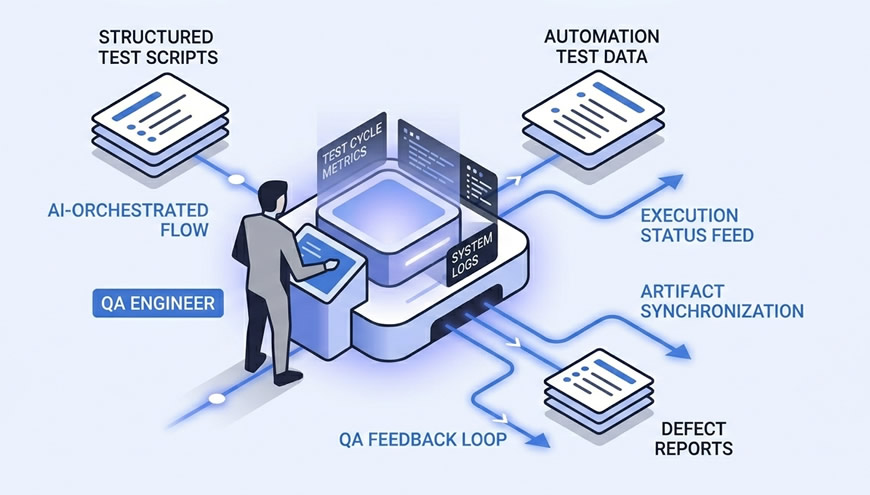
Selecting the right test management tool depends strictly on workflow requirements. Atlassian-native teams prefer Xray or Zephyr, compliance-heavy enterprises lean toward TestRail, and integration-focused teams blending GitHub and Jira workflows find the best fit with TestQuality and its native CLI.
- Atlassian-native teams: Organizations prioritizing native Jira test execution without slowing Jira performance should evaluate Zephyr or Xray. These tools weave test management directly into the development process, keeping all work items inside the Atlassian ecosystem.
- Hybrid Jira and GitHub teams: Integration-focused teams seeking modern testing that blends seamlessly across platforms should select TestQuality. Its dual API and native app integration, combined with the TestQuality CLI for uploading JUnit XML results from runners like Cypress or pytest, provides unmatched flexibility.
- Compliance-heavy enterprises: Large enterprises requiring comprehensive compliance reporting, hierarchical organization, and detailed audit trails are best served by TestRail or PractiTest.
- Growing startups: Teams needing a modern, unified platform for both manual and automated testing should consider Qase, which offers a clean interface and strong bilateral sync.
- Free-tier exploration: Smaller teams looking to experiment with AI testing tools before committing budget can utilize the free tiers offered by QMetry, Zephyr, or TestQuality's Free Test Plan Builder.
Transitioning to an AI-assisted quality engineering model requires infrastructure that supports both automated pipelines and human-in-the-loop validation. By carefully comparing Jira integration depth, pricing transparency, and AI generation capabilities, QA architects can select a test management tool that scales reliably. The right platform transforms testing from a bottleneck into a continuous orchestration engine — the foundation of a modern Agentic SDLC.
Technical Deep Dive FAQ
Key Takeaways
What to remember when evaluating the 9 leading tools
Data-backed summary across pricing, AI features, and integration depth.
AI adoption is universal in 2026: 84% of developers use or plan to use AI (Stack Overflow Developer Survey 2025), and all 9 tools in this comparison now ship AI test generation.
The experimentation-to-scaling gap is real: 43% of organizations experiment with Gen AI in QA but only 15% have scaled it (Capgemini World Quality Report 2025-26). Tool choice closes the gap.
Pricing transparency separates buyer-friendly vendors: 7 of 9 tools publish per-seat pricing. TestQuality at $9/user/month is the lowest published entry; qTest and Jira Rovo gate pricing.
Input format range now defines AI quality: TestStory.ai accepts the broadest input set in this comparison — user stories, epics, issues, free-form text, process diagrams, and source code.
Hybrid Jira integration is rare: TestQuality is the only tool in this comparison offering both a native Jira app AND bilateral API sync, giving teams the choice of architecture.
Five criteria, not one: evaluate Jira integration, AI capabilities, scalability, automation support, and end-to-end management — not just AI features in isolation.
The best test management tool in 2026 is the one that closes your experimentation-to-scaling gap while keeping humans firmly in the validation loop — not the one with the most AI features on its marketing page.
Start Free Today
Transition from script-writing to outcome-orchestration.
TestStory.ai generates structured test cases from your user stories, acceptance criteria, or architecture diagrams — then syncs them directly into TestQuality for execution, tracking, and team collaboration. Skip the opaque enterprise sales cycle: published pricing, hybrid Jira integration, and 500 AI credits included every month.
✦ Get 500 TestStory.ai credits every month included with your TestQuality subscription — no extra cost.
No credit card required on either platform.