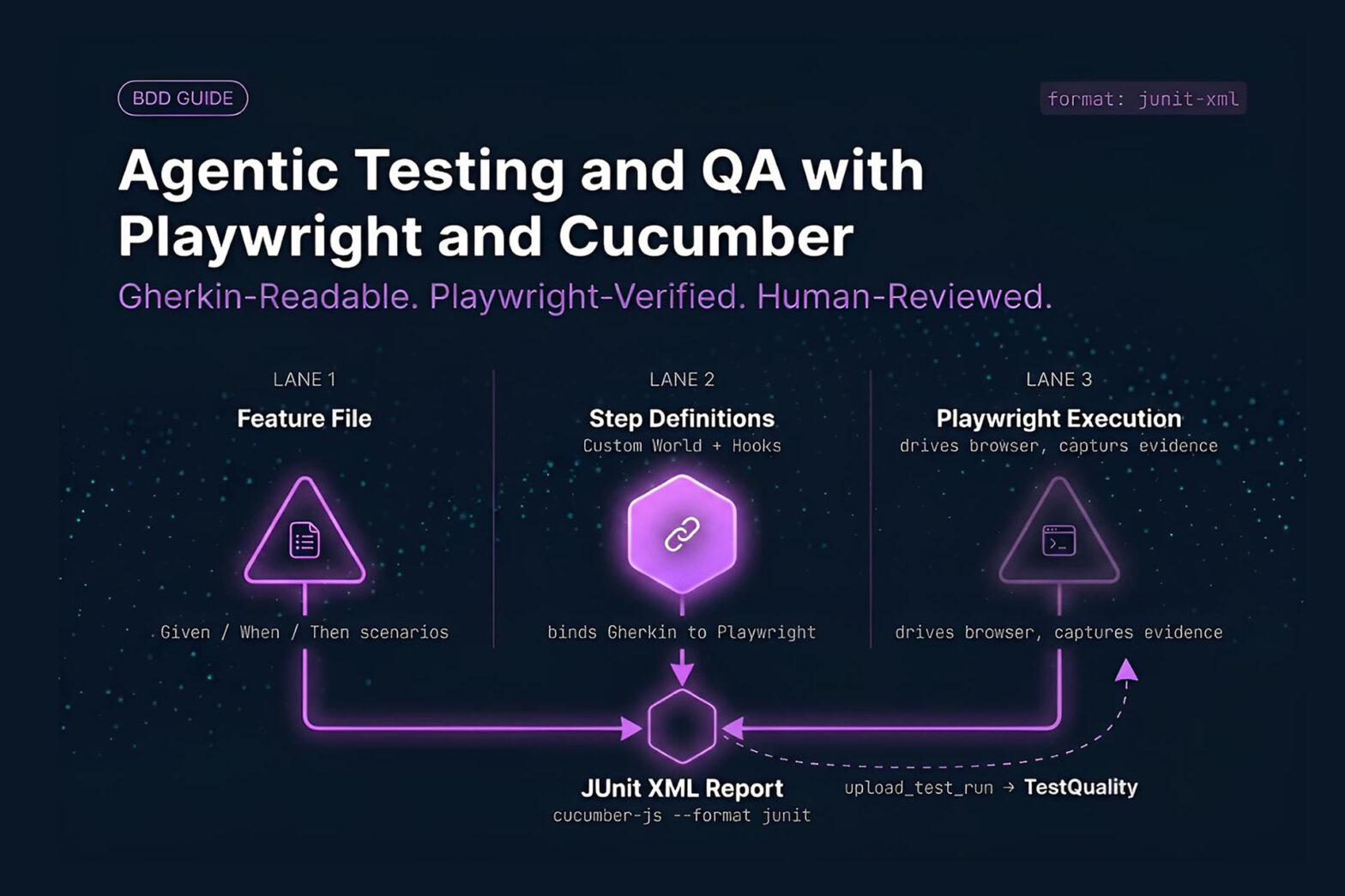
Playwright and Cucumber is a BDD testing combination that pairs Gherkin feature files with Playwright’s browser automation engine, letting teams write behavior in plain language while executing it through deterministic, code-driven checks. Cucumber parses Feature and Scenario statements written with Given, When, and Then keywords, step definitions bind those statements to TypeScript or JavaScript functions,… Continue reading Agentic Testing and QA with Playwright and Cucumber
Author: Jose Amoros
Jose Amoros is part of the TestQuality marketing team at Bitmodern Inc., where he covers software testing strategy, agentic QA architecture, and AI-powered test management. For the past 4+ years, Jose has authored over a hundred articles on Software Testing areas such as Test Automation, Manual Testing, or QA Best Practices, helping teams streamline their testing workflows. His content dives deep into exploratory testing, test frameworks, and Agile QA strategies, making complex concepts actionable. At TestQuality, he bridges the gap between technical testing concepts and real-world implementation. Passionate about making QA accessible, he believes “great testing starts with understanding both the code and the people who use it.”
Connect with Jose on LinkedIn for more QA insights.
Gauntlet Loop: How AI Agents Build, Judge, and Fix Work
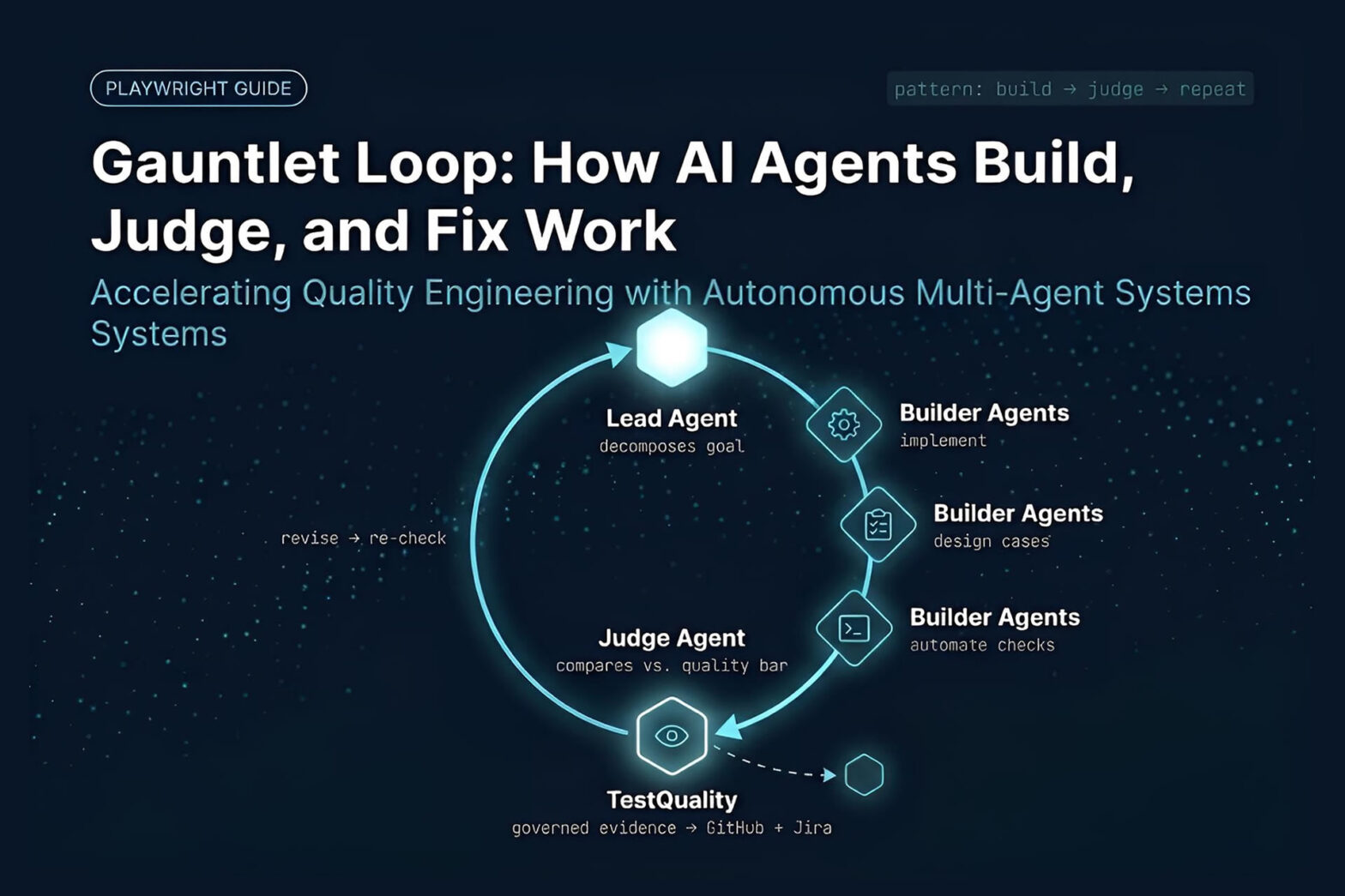
A Gauntlet Loop is an agentic AI workflow in which a lead agent breaks a broad goal into small, independently judgeable pieces, assigns them to specialist builder agents, and routes every result through a separate judge agent that compares the work against a quality bar. The pattern was popularized by Matt Shumer’s July 2026 “Claude… Continue reading Gauntlet Loop: How AI Agents Build, Judge, and Fix Work
Test Case Management: How Modern QA Teams Organize, Track, and Scale Test Cases

Test case management is the workflow modern QA teams use to organize, version, and scale test cases far beyond anything a spreadsheet can handle. If your test suite has outgrown its spreadsheet, a dedicated test case management tool is the upgrade that pays for itself inside the first sprint. Your test suite started as a… Continue reading Test Case Management: How Modern QA Teams Organize, Track, and Scale Test Cases
Building an Agentic Playwright Framework for QA Teams
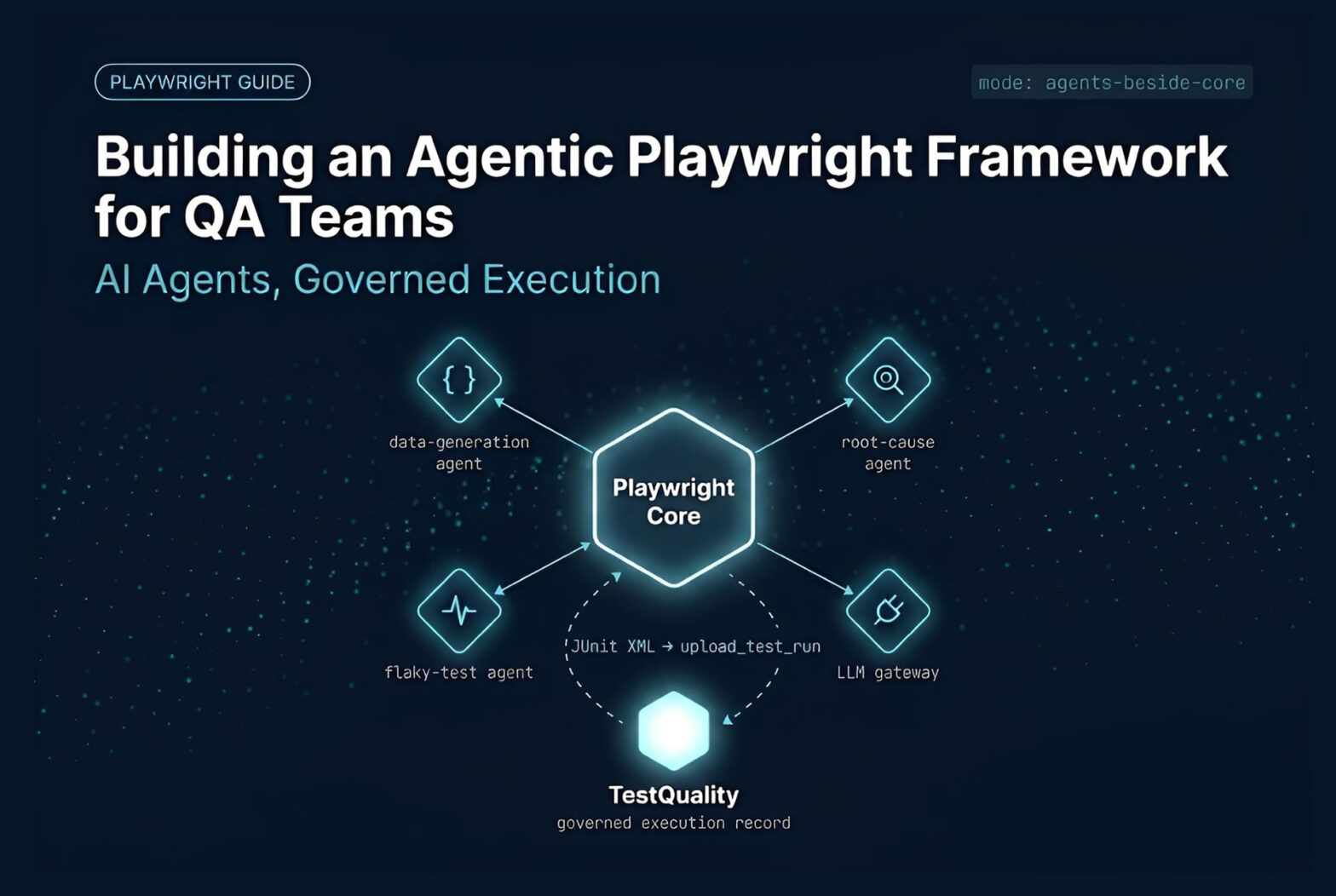
An agentic Playwright framework is a Playwright test suite extended with AI agents that handle bounded work around execution: generating schema-controlled test data, analyzing failure evidence, and surfacing flaky-test patterns. Playwright still owns browser automation, assertions, and pass/fail reporting — agents sit beside that loop, not inside it. Each agent reads a defined input, such… Continue reading Building an Agentic Playwright Framework for QA Teams
Types of Test Cases in Software Testing (with Free Templates)

The right mix of test case types turns testing from busywork into real coverage. Start with a template to standardize your format, then let AI handle the volume so your team can spend its energy on the tests that actually matter. Every bug that reaches production started as a test someone didn’t write. Understanding the… Continue reading Types of Test Cases in Software Testing (with Free Templates)
How to Evaluate AI Test Case Builders for Your Team’s Workflow

Evaluating an AI test case builder is less about how flashy the AI looks in a demo and more about how cleanly it drops into the stack your team already runs. Score every candidate on workflow fit first and raw AI output second, and you will end up with test building software your team actually… Continue reading How to Evaluate AI Test Case Builders for Your Team’s Workflow
Good vs Bad Gherkin Test Cases: Examples That Actually Work

Well-written Gherkin test cases are the foundation of successful BDD, but sloppy scenarios wreck team collaboration and break your automation suite. The gap between good and bad Gherkin isn’t syntax; it’s whether your scenarios describe what the system does instead of how it does it. Writing effective Gherkin test cases separates BDD implementations that ship… Continue reading Good vs Bad Gherkin Test Cases: Examples That Actually Work
Test Management Software: The Complete Buyer’s Guide for QA Teams

The right test management software connects your test plans, dev tools, and results into one system that actually keeps up with how you ship. If your tests still live in spreadsheets or a tool that can’t see your pipeline, you’re paying for it in coverage gaps and slow releases. Shortlist platforms that plug straight into… Continue reading Test Management Software: The Complete Buyer’s Guide for QA Teams
Gherkin API Testing: Patterns and Examples

Gherkin API testing turns REST endpoints into plain-language Given-When-Then scenarios that work as both living documentation and automated checks. Start with one feature file for your busiest endpoint, then roll the patterns below across your whole API surface. APIs are where modern software actually breaks. The average application now leans on dozens of APIs to… Continue reading Gherkin API Testing: Patterns and Examples
What Is Test Automation Software? Types & How to Choose

Test automation software runs your tests automatically so teams catch bugs sooner and ship faster. Start by mapping which tests actually deserve automation, then choose the tool that fits that work instead of the other way around. Test automation software is a category of tools that executes your software tests through scripts and automated runs… Continue reading What Is Test Automation Software? Types & How to Choose