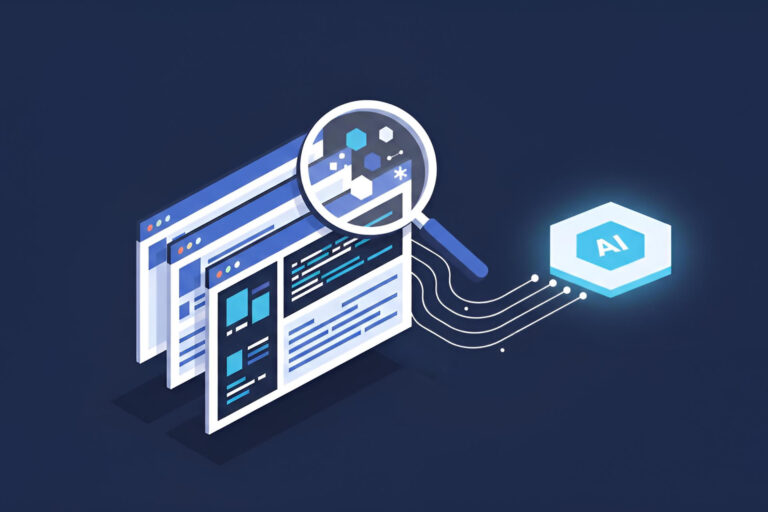
Chrome DevTools is the built-in browser inspector and debugger that ships with Google Chrome, giving testers ground-truth visibility into DOM state, network traffic, device rendering, and runtime behavior. In the context of Agentic Testing and QA — the emerging pattern where AI agents draft, execute, and summarize tests with reduced human supervision — DevTools remains… Continue reading Agentic Testing and QA: Why Chrome DevTools Still Matters for Modern Testers
Category: Agentic Testing
Agentic testing is a quality assurance approach where autonomous AI agents plan, execute, and refine test workflows without prewritten scripts. Powered by large language models, these agents perceive application UIs, reason through workflows, and self-heal when the software underneath them changes — operating closer to how a human tester works than to how a traditional automation framework runs.
Agentic Testing and QA: A 90-Day Playwright Learning Roadmap
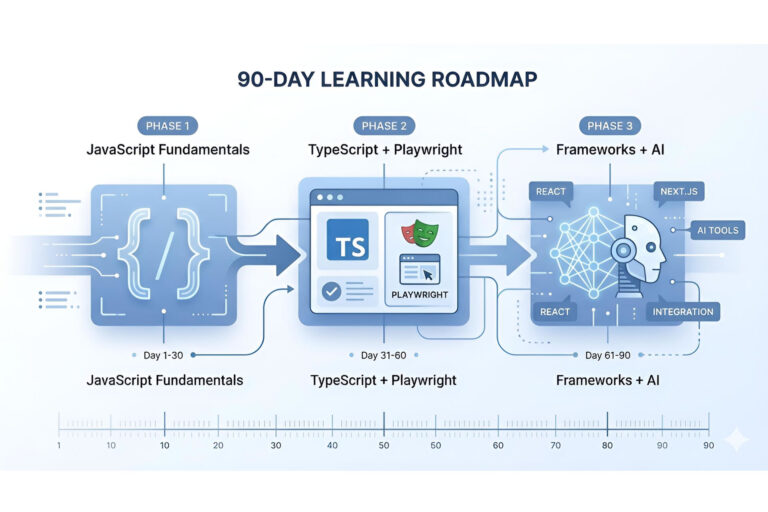
Opening Definition A 90-day Agentic Testing and QA roadmap is a structured learning plan that combines daily JavaScript and TypeScript practice with hands-on Playwright automation and AI-assisted testing skills. It is built around three 30-day phases — language fundamentals, Playwright fundamentals, and advanced framework plus AI-oriented work — and assumes about one hour of practice… Continue reading Agentic Testing and QA: A 90-Day Playwright Learning Roadmap
Context Engineering: Build Reliable AI Agents Without Vibe Coding
Key Takeaways The Discipline That Separates Reliable AI Agents From Technical Debt Factories Programmatic boundaries. Builder-validator chains. Verified outputs. Context engineering replaces vibe coding by enforcing programmatic boundaries, modular task decomposition, and strict builder-validator chains that eliminate AI technical debt at the source. Silent semantic errors drive 75.17% of multi-agent failures, requiring continuous verification loops… Continue reading Context Engineering: Build Reliable AI Agents Without Vibe Coding