
Key Takeaways
Effective test case management transforms scattered testing efforts into a systematic quality assurance powerhouse.
- Strategic organization: Structured test case management reduces defects by up to 40% and accelerates release cycles through better test prioritization and reusability
- Template standardization: Using proven test case templates ensures consistency, reduces rework, and enables teams to scale testing efforts without sacrificing quality
- Tool integration: Modern test management software connects testing to your entire DevOps ecosystem, creating seamless workflows from requirements to deployment
- Data-driven improvement: Tracking test metrics and execution patterns reveals quality trends, enabling teams to optimize testing strategies and prevent recurring issues
Start treating test case management as a strategic investment, not an administrative burden.
Poor software quality costs the U.S. economy at least $2.41 trillion annually, according to the Consortium for Information & Software Quality's 2022 report. Yet many QA teams still struggle with scattered test cases, missing documentation, and zero visibility into testing progress. The difference between teams that ship reliable software and those drowning in production bugs? A solid approach to test case management.
What Is Test Case Management?
Test case management is the systematic process of creating, organizing, executing, and tracking test cases throughout the software development lifecycle. Think of it as the central nervous system of your QA process, integrating all aspects from planning to execution and reporting.

Every test case gets a unique identifier, clear steps, expected results, and status tracking. This structured approach answers critical questions: Which tests run in which environments? When do tests need updates? What do results tell us about software quality?
Without proper test case management, testing becomes chaos. Teams duplicate efforts, miss critical scenarios, and waste hours hunting for test results in email threads and spreadsheets. Meanwhile, bugs slip through to production, frustrating users and damaging your brand.
Modern QA teams treat their test cases as valuable assets, maintaining them with the same discipline developers apply to code. They organize tests into logical suites, link them to requirements for traceability, and track execution across multiple environments.
Why Does Effective Test Case Management Matter?
The impact of structured test case management extends far beyond just organizing tests. According to the World Quality Report 2024-25, 68% of organizations now utilize generative AI in their quality engineering processes, creating unprecedented volumes of test data that must be managed systematically.
Teams that implement robust test case management practices see measurable benefits across their entire delivery pipeline. Quality improves because comprehensive test coverage leaves fewer gaps for bugs to hide. Release cycles accelerate because teams spend less time figuring out what to test and more time actually testing. Collaboration strengthens when everyone can see test status, priorities, and results in one place.
Five Critical Benefits of Structured Testing
- Comprehensive Coverage: Organized test suites ensure nothing falls through the cracks. You can trace each requirement to specific test cases, proving thorough validation.
- Faster Onboarding: New team members get up to speed quickly when test cases include clear prerequisites, detailed steps, and expected outcomes.
- Reliable Regression: Maintaining a well-organized test library means you can confidently retest after changes, catching unintended side effects before they reach users.
- Data-Driven Decisions: Tracking test execution metrics reveals patterns in defect clusters, flaky tests, and coverage gaps, enabling strategic QA improvements.
- Audit Trail: Complete test history provides the documentation needed for compliance requirements and post-incident analysis.
Consider an e-commerce platform launching a new payment integration. Without structured test case management, the QA team might test the happy path but miss edge cases around failed transactions, refunds, or currency conversions. A comprehensive test suite captures all these scenarios, organizes them by priority, and tracks execution across test and staging environments.

Essential Components Every Test Case Needs
Building effective test cases requires understanding the core elements that make them actionable, repeatable, and valuable. Each component serves a specific purpose in guiding testers through execution and capturing meaningful results. Here's what every well-structured test case must include:
| Component | Purpose | Example |
| Test Case ID | Unique identifier for tracking and reference | TC-AUTH-001, TC-CART-025 |
| Title | Clear description of what's being tested | "Verify password reset email delivery" |
| Objective | Brief explanation of the test's goal | "Ensure users receive password reset emails within 2 minutes" |
| Preconditions | Required state before test execution | "User account exists, email server is operational" |
| Test Steps | Detailed instructions in sequence | "1. Navigate to login page 2. Click 'Forgot Password' 3. Enter email address..." |
| Test Data | Specific inputs needed for execution | "Email: test@example.com, Username: testuser01" |
| Expected Results | Anticipated outcome for each step | "System sends reset email, confirmation message appears" |
| Actual Results | What actually happened during execution | "Reset email received in 45 seconds, message displayed correctly" |
| Status | Current state of the test | Pass, Fail, Blocked, Not Run |
| Priority | Importance level for execution order | Critical, High, Medium, Low |
The difference between mediocre and excellent test cases often comes down to specificity. Vague steps like "verify login functionality" leave too much room for interpretation. Better: "Enter valid username 'admin@company.com' and password 'Test123!', click login button, verify dashboard loads within 3 seconds and displays welcome message."
Good test cases also anticipate failure. What happens when the email server is down? When a user enters an invalid email format? When they click the reset link twice? Testing the unhappy paths matters as much as validating the ideal scenario.
Building Your Test Case Management Strategy
Strategy transforms random testing into systematic quality assurance. Start by establishing clear objectives: What quality standards must your software meet? Which features carry the highest risk? Where do users encounter the most problems?

Risk-Based Prioritization Gets Results
Not all test cases deserve equal attention. High-risk areas like payment processing, data security, and core user workflows demand rigorous testing. Lower-risk features like cosmetic UI updates can receive lighter coverage. Risk-based prioritization ensures you invest testing resources where they matter most.
Calculate risk by multiplying likelihood and impact. A critical feature used by every customer every day that breaks frequently? Maximum priority. A rarely-used admin function with multiple fallbacks? Lower priority. This approach focuses your team on protecting what matters while avoiding the trap of trying to test everything equally.
Building Reusable Testing Assets
Smart teams avoid reinventing the wheel. Create reusable test components for common workflows like user authentication, form validation, and error handling. When these patterns appear across multiple features, reference shared test steps instead of duplicating documentation.
Reusable assets accelerate test case development and ensure consistency. When your authentication process changes, update one shared test component instead of hunting through hundreds of individual test cases. This maintainability becomes increasingly valuable as your test library grows.
Automation Integration Amplifies Efficiency
Modern test case management seamlessly connects manual and automated testing. When you automate a test case, maintain the original documentation but link it to automation scripts. Track which tests run automatically in CI/CD pipelines, linking automated results directly to their documented test cases for complete traceability, versus those requiring manual execution.
This hybrid approach leverages automation's speed for repetitive regression tests while preserving human judgment for exploratory testing and complex scenarios. The key is managing both types within a unified system that provides complete visibility into testing coverage.
Test Case Templates: Your Quality Toolkit
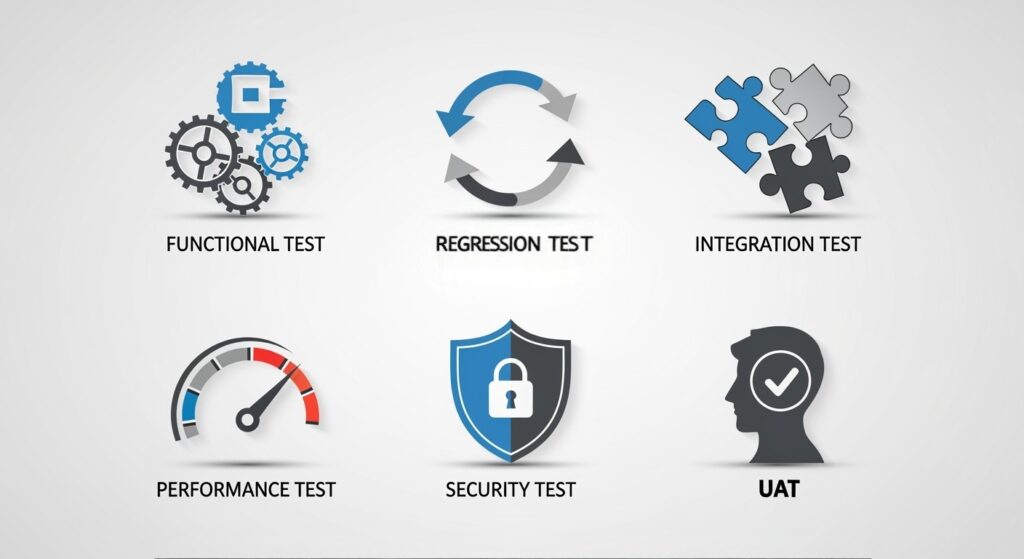
Templates standardize your testing process, ensuring consistent documentation regardless of who writes the test case. Here are six essential templates every QA team needs:
1. Functional Test Case Template
Validates that features work as specified. Includes prerequisites, step-by-step instructions, expected results, and priority levels. Perfect for testing user workflows, business logic, and feature interactions. Use this template for 70-80% of your test cases.
2. Regression Test Case Template
Confirms existing functionality remains intact after changes. Focuses on high-value features and previously identified bug areas. Includes version tracking to identify when tests were last executed and against which build. Essential for maintaining quality across releases.
3. Integration Test Case Template
Verifies that different system components communicate correctly. Documents API endpoints, data formats, authentication requirements, and expected responses. Critical for microservices architectures and third-party integrations where component boundaries create failure points.
4. Performance Test Case Template
Measures system behavior under specific loads. Specifies concurrent users, transaction volumes, response time thresholds, and resource utilization limits. Captures baseline metrics for comparison across builds.
5. Security Test Case Template
Tests application defenses against common vulnerabilities. Includes authentication bypass attempts, SQL injection tests, XSS validation, and access control verification. Documents test data that won't corrupt production systems.
6. User Acceptance Test (UAT) Template
Validates business requirements from an end-user perspective. Written in business language rather than technical jargon. Focuses on complete user journeys and business outcomes rather than individual functions.
Each template should be customizable to your specific needs while maintaining the core components that make tests actionable and repeatable.
How Do You Select the Right Test Management Software?
Choosing test management software shapes your team's efficiency for years. The right platform integrates seamlessly with your development workflow, while the wrong one creates friction and workarounds. Start by evaluating these critical capabilities:
Integration ecosystem matters more than most teams realize. Your test management software should connect with your issue tracker, CI/CD pipeline, automation frameworks, and requirements management system. Native integrations beat custom scripts because they receive updates and support.
Ease of use determines adoption. Complex tools with steep learning curves get abandoned or underutilized. Look for intuitive interfaces that make it easy to create tests, execute runs, and view results without extensive training. Both technical and non-technical team members should be able to contribute.
Collaboration features enable team coordination. Multiple testers need to execute tests simultaneously without conflicts. Real-time status updates keep everyone informed. Comment threads allow discussions on specific test cases. Version control tracks changes over time.
Reporting and analytics transform raw test data into actionable insights. Dashboards should surface key metrics like test coverage, pass rates, execution trends, and defect distributions. Customizable reports allow different stakeholders to see relevant information without overwhelming detail.
Scalability ensures the tool grows with your needs. What works for 100 test cases breaks down at 10,000. Cloud-based solutions, by their nature, offer superior scalability and accessibility compared to self-hosted alternatives, though some organizations may have specific on-premises deployment requirements for security or compliance.
TestQuality differentiates itself through deep integration with GitHub and Jira, treating test management as part of your development workflow rather than an isolated activity. Tests link directly to user stories and requirements, providing end-to-end traceability. Automated test results flow back from CI/CD pipelines without manual data entry.
The platform's test plan builder enables visual test planning that aligns testing strategy with project goals. Teams can see at a glance which features have adequate coverage and where testing gaps exist. This visibility proves invaluable during release planning and risk assessment.
FAQs
What's the difference between test case management and test execution?
Test case management encompasses the entire lifecycle of test cases: creation, organization, updates, and tracking. Test execution is the specific act of running those tests and recording results. Think of management as the strategy and execution as the implementation. You need both, well-coordinated through a unified platform.
How many test cases should we maintain?
Quality trumps quantity. A focused suite of 500 well-maintained, high-value test cases outperforms 5,000 outdated or redundant tests. Aim for comprehensive coverage of critical paths and high-risk areas. Regularly prune tests that no longer provide value. Consider risk, complexity, and business impact when deciding what to test.
Should we write test cases before or during development?
Both approaches have merit depending on your methodology. Agile teams often write test cases alongside user stories during sprint planning. This clarifies acceptance criteria and improves requirements quality. Waterfall teams typically complete test cases during the design phase. The key is having test cases ready before testing begins.
How do we keep test cases current as the application evolves?
Schedule regular test case reviews as part of your sprint or release cycle. When requirements change, update corresponding test cases immediately. Tag tests affected by code changes so teams know what to revalidate. Automate what you can to reduce maintenance burden. Most importantly, treat test case updates as essential work, not optional cleanup.
Transform Your Testing Process Starting Today
Effective test case management separates teams that consistently ship quality software from those constantly firefighting production issues. The practices outlined here provide a foundation for building systematic QA processes that scale with your application's complexity and your team's growth.
Remember that test case management isn't about perfection on day one. Start by implementing templates for your most critical test scenarios. Establish a consistent naming convention and folder structure. Connect your tests to requirements. Track execution consistently. Build from this foundation, adding sophistication as your processes mature.
The teams that excel at test case management share common traits: They treat test cases as valuable assets worth maintaining. They leverage test management software that integrates with their development workflow. They continuously refine their approach based on what they learn from each release cycle.
If you're ready to move beyond the limitations of spreadsheets and disconnected testing tools to embrace a truly integrated and efficient QA process, TestQuality offers a modern approach to test case management that unifies manual testing, test automation, and CI/CD workflows in one platform. Start your free trial today and experience how proper test case management transforms software quality.